
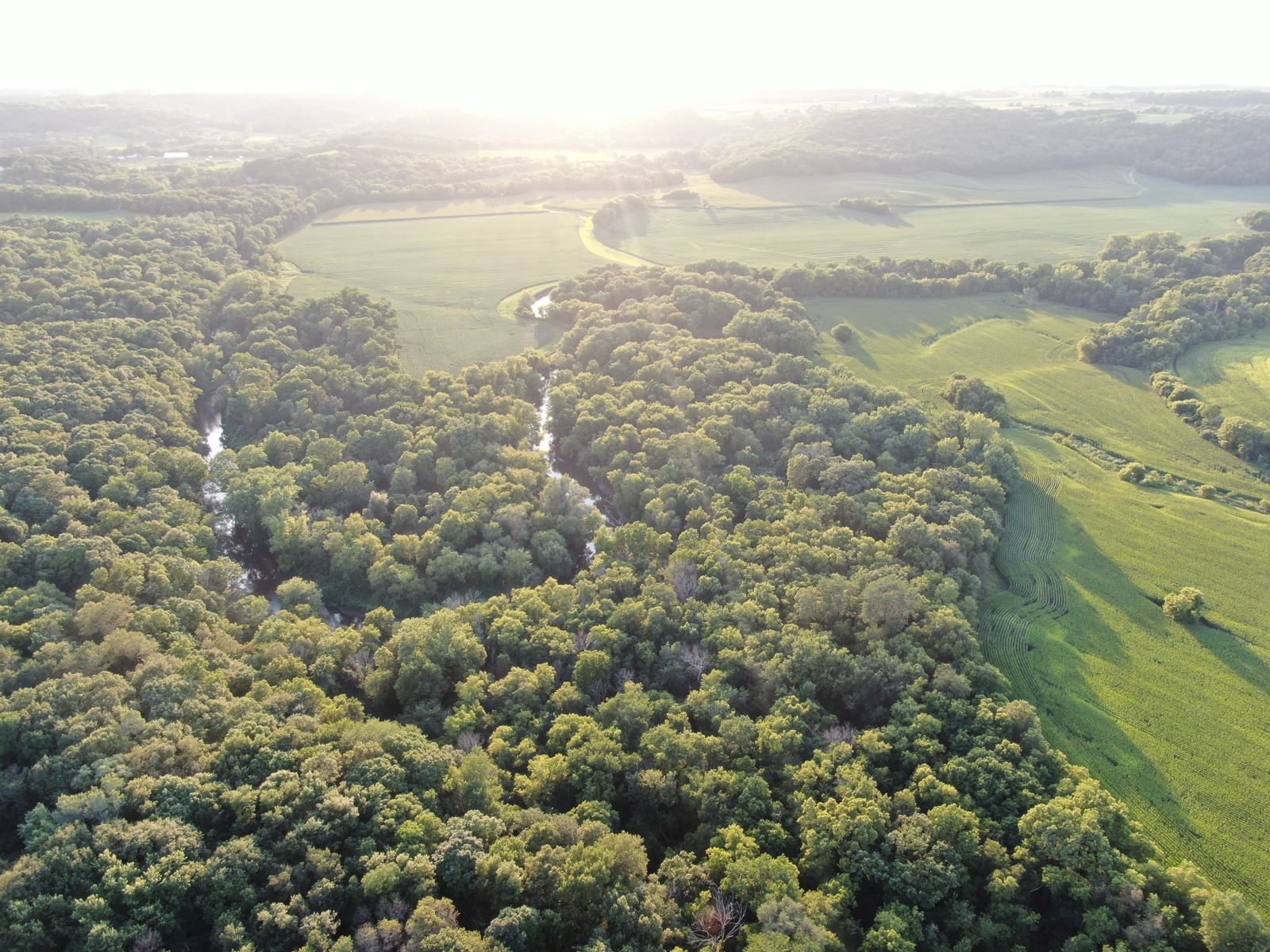
Some sales are about price per acre. This one was about a family's wish for what would happen to their land after they sold it. The farm sits just outside Rochester, home of Mayo Clinic.
The Moon family farmed along the Zumbro River northwest of Rochester for nearly a century. When they decided to sell, they wanted the land kept as a natural place that people could enjoy. Here's how the sale worked and what it can teach other landowners thinking about a conservation buyer.
The short version: I represented the sellers of a 421-acre farm near Byron in Olmsted County. It closed on December 7, 2022, with The Nature Conservancy (TNC) as the buyer. TNC and Trust for Public Land then donated the land to the Minnesota DNR, which announced Moon Valley Wildlife Management Area on May 20, 2024. The WMA is now open to the public.
Key takeaways
- A conservation buyer can be a good fit when the family cares about what happens to the land after the sale.
- Expect contingencies: site cleanup, title work and easement questions all had to be settled before this sale closed.
- The public funding came from Minnesota's Outdoor Heritage Fund, on the recommendation of the Lessard-Sams Outdoor Heritage Council.
- Patience pays off. It took about 17 months after closing for the land to open to the public as a WMA.
The property at a glance
| Location | Near Byron and Genoa, Olmsted County, MN |
|---|---|
| Size | 421 acres per our transaction file (DNR/TPL announcement: 420 acres) |
| Land | A mix of tillable land, timber and rolling terrain. The Zumbro River borders the northeast, east and south sides. No tile, no irrigation. |
| Closed | December 7, 2022 (sellers to The Nature Conservancy) |
| WMA announced | May 20, 2024 (donated to the MN DNR by TNC and Trust for Public Land) |
| Funding | Outdoor Heritage Fund (Clean Water, Land and Legacy Amendment), as recommended by the Lessard-Sams Outdoor Heritage Council |
| My role | Listing agent for the sellers |
The challenge
This 421 acres was part of a larger family farm of about 800 acres. The family decision-makers all lived out of state and were over 70, so I worked with four main decision-makers who reported back to the rest of the family.
The family's goal went beyond selling. They wanted the land protected. Linda Moon put it this way in the DNR/TPL announcement: "It was our beautiful farm, and now it will return to its natural state open to everyone."
There was plenty to coordinate along the way:
- Contingencies: Several old abandoned granaries had to come down, a well had to be sealed, and old equipment and debris had to be cleared from the whole farm.
- Title and easements: We had to work through title issues and the delineation of a BP pipeline easement.
- Staying the course: While the farm was under contract, a private buyer came in with a significantly higher offer. The family stayed committed to their conservation goal and their agreement with TNC.
The approach
With the decision-makers spread across several states, communication came first. We held weekly Zoom meetings and I sent regular updates, and every document went out for e-signature.
- Marketing: The farm was marketed on our brokerage website, the MLS, Land.com and LandsofAmerica.com.
- Working with the buyer: I worked closely with The Nature Conservancy's representative. We walked the land together and handled title questions as a team. My photos and help with articles supported TNC's fundraising for the project.
- Clearing the contingencies: I found and hired contractors, gathered their bids, and managed the cleanup, the well sealing and the removal of the granaries.
- Keeping the timeline: I set deadlines and kept everyone on them through closing.
Pro tip: When the decision-makers live in different states, a standing weekly call does more than a hundred one-off emails. Everyone hears the same update at the same time.
The outcome
The Nature Conservancy waived a few conditions to get the sale closed, and the family kept its commitment to TNC. The sale closed on December 7, 2022.
On May 20, 2024, the DNR announced that it had received the land as a donation from TNC and Trust for Public Land. It's now Moon Valley Wildlife Management Area, about 15 minutes north of downtown Rochester. According to TPL and TNC, it includes:
- Nearly three miles of shoreline along the Middle Fork of the Zumbro River
- Forested bluffs and springs
- About 200 acres of former cropland that will be restored to wetlands, prairie and floodplain forest
- Public access for hunting, fishing, trapping, hiking, photography and bird-watching
It joins the DNR's statewide system of 1,521 wildlife management areas covering 1.39 million acres.
How does selling land to the DNR or a conservation buyer work?
Here's how this sale unfolded, step by step. Every project is different, and timelines and requirements vary by buyer and funding source.
- Set your goals. The family decided that keeping the land natural mattered as much as the sale itself.
- Market the land and find the right buyer. Here the buyer was The Nature Conservancy, a nonprofit conservation organization. Conservation groups often buy first and transfer the land to the state later.
- Negotiate a purchase agreement with contingencies. Expect conditions about the land's condition, title and easements.
- Clear the contingencies. On this farm that meant removing structures, sealing a well, cleaning up debris, settling title issues and delineating the pipeline easement.
- Line up the funding. This project used the Outdoor Heritage Fund, appropriated by the Legislature on the Lessard-Sams Outdoor Heritage Council's recommendation. How a conservation buyer sets its price and lines up funding varies by organization and program, so ask early what they require.
- Close. The sellers' sale to TNC closed on December 7, 2022.
- Transfer to the state. TNC and TPL donated the land to the DNR, which announced the new WMA on May 20, 2024.
- Restoration and public use. Restoration of the former cropland continues, and the land is open to the public under WMA rules.
Lessons for landowners
- Decide what matters most. Is it the top dollar, the legacy, or both? That answer tells you which buyers to approach.
- Clean up early. Old buildings, wells and debris can hold up a sale, so get bids for that work before you list.
- Know your easements. Pipeline, utility and access easements can add weeks of work.
- Expect a longer timeline. Conservation deals involve more parties, including the nonprofit, the funding source and the state agency.
- Keep your word. Other offers can show up mid-deal. Talk with your attorney about your obligations under a signed purchase agreement.
The bottom line
The Moon family's farm is now a public wildlife area where the river, the bluffs and the restored prairie are open to everyone. It's one of the most rewarding sales of my career, and I still hike there whenever I can.
Thinking about selling land with a legacy in mind?
If you'd like to talk through a sale to a conservation buyer, a family farm sale or another option, I'd be glad to help. Request a free farmland valuation or call or text me at (507) 923-7657. You can also browse our current farm and land listings.
Frequently Asked Questions About Selling Land for Conservation
Can I sell my farm to the Minnesota DNR or a conservation group?
Yes. In this case, the family sold to The Nature Conservancy, which later donated the land to the DNR along with Trust for Public Land. Whether your land is a fit depends on its habitat value and on available funding.
Where does the money for WMA land come from?
Moon Valley was funded by the Outdoor Heritage Fund, created under Minnesota's Clean Water, Land and Legacy Amendment and appropriated by the Legislature as recommended by the Lessard-Sams Outdoor Heritage Council.
How long does a conservation sale take?
It varies. For Moon Valley, the sale to TNC closed on December 7, 2022, and the DNR announced the new WMA on May 20, 2024.
Will the land be open to the public?
For land bought with Outdoor Heritage Fund dollars, yes. TNC notes that the Minnesota Constitution requires those lands to be open to public hunting and fishing during open seasons.
What can hold up a conservation sale?
On this farm, the contingencies included removing old structures, sealing a well, clearing debris, settling title issues and delineating a pipeline easement.
Disclosure: Facts about the WMA come from the cited DNR, TNC and Trust for Public Land sources. This case study is general information, not legal or tax advice, and it does not guarantee any result. Every property and transaction is different. Equal Housing Opportunity.
Sold by Jen Busch while affiliated with LandProz Real Estate, a previous brokerage, before she founded United Country Real Estate | Midwest Home & Farm Realty.